
Revisit Intention in Coastal Tourism: The Interaction of Experience Quality Destination Image, Perceived Value, and Destination Trust
DOI:
https://doi.org/10.22452/IJIE.vol18no2.9Keywords:
Revisit intention, Experience quality, Destination image, Perceived value, Destination trustAbstract
Although understanding tourist preferences is essential, many tourist
destinations still require special attention to identify and meet their needs. This analysis
identifies factors influencing visitors’ intention to revisit by selecting Alor-Lembata
National Tourism Area, East Nusa Tenggara, Indonesia, as the research object. This
study used a quantitative survey with 250 domestic tourist respondents to analyse
the influence of experience quality, destination image, perceived value, and trust in
the destination on revisit intention. The outcome of the SEM examination reveals that
although experience quality does not directly drive intention to revisit, it occurs through
destination image, perceived value, and trust. Perceived value was the most dominant
factor influencing revisit intention, followed by trust. Though not directly influencing
trust, destination image plays an important role in shaping visitor perceptions. Thus,
trust becomes an important mediating variable, where perceived value and destination
image contribute to building visitors’ trust levels in the destination. This research
highlights improving service quality through quality destination management, which
substantially affects experience quality, destination trust, and intention to revisit. Thus,
this can benefit Indonesia’s sustainability tourism expansion, especially in the Alor-
Lembata National Tourism Area.
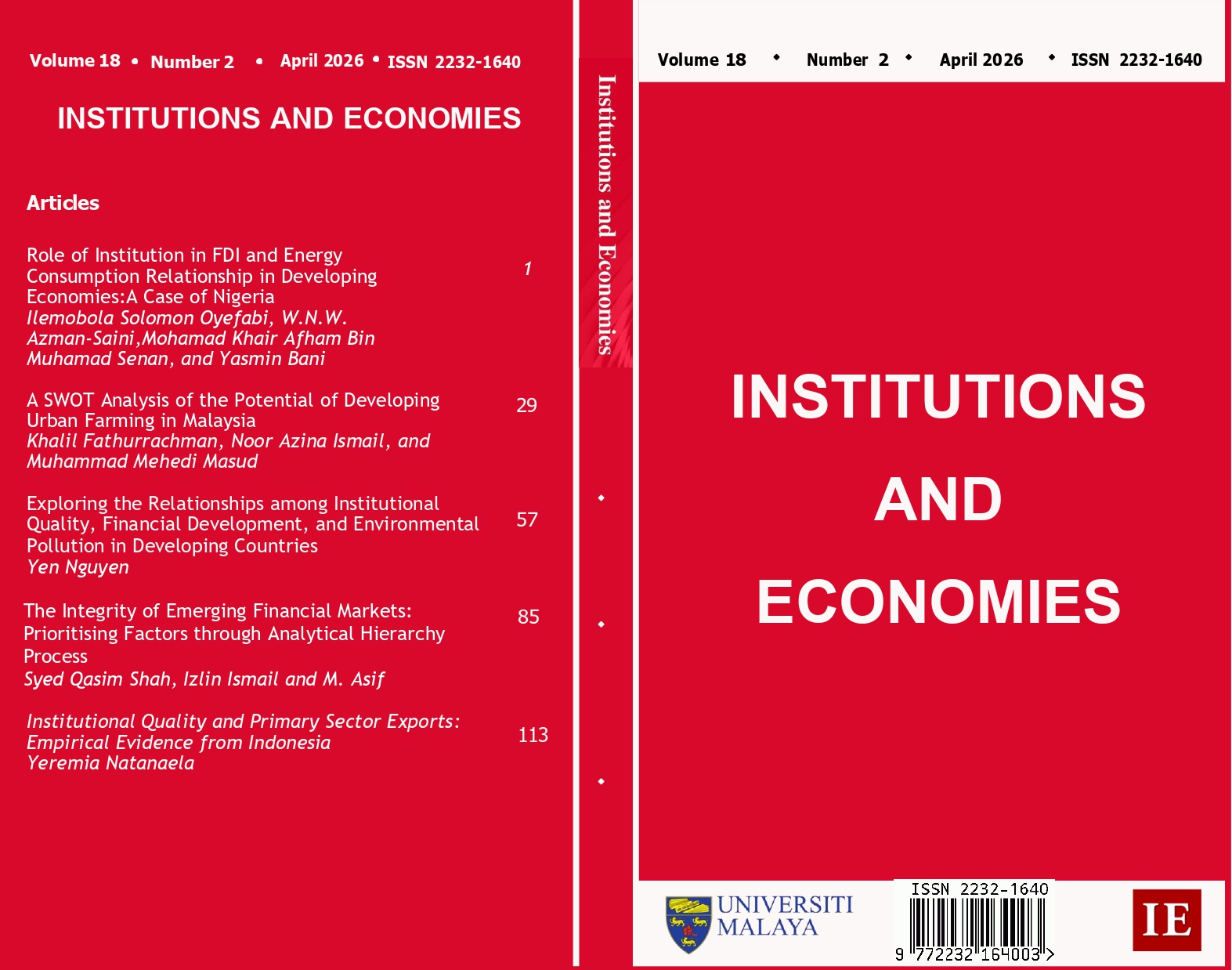
Downloads
Published
Issue
Section
License
Submission of a manuscript implies: that the work described is original, has not been published before (except in the form of an abstract or as part of a published lecture, review, or thesis); that is not under consideration for publication elsewhere; that its publication has been approved by all co-authors, if any, as well as tacitly or explicitly by the responsible authorities at the institution where the work was carried out. Transfer of copyright to the University of Malaya becomes effective if and when the article is accepted for publication. The copyright covers the exclusive right to reproduce and distribute the article, including reprints, translations, photographic reproductions, microform, electronic form (offline and online) or other reproductions of similar nature.
An author may self-archive the English language version of his/her article on his/her own website and his/her institutions repository; however he/she may not use the publishers PDF version which is posted on www.ijie.um.edu.my. Furthermore, the author may only post his/her version, provided acknowledgement is given to the original source of publication and a link must be accompanied by the following text: The original publication is available at www.ijie.um.edu.my.
All articles published in this journal are protected by copyright, which covers the exclusive rights to reproduce and redistribute the article (e.g. as offprint), as well as all translation rights. No material published in this journal may be reproduced photographically or stored on microfilm, in electronic database, video disks, etc., without first obtaining written permission from the publishers. The use of general descriptive names, trade names, trademarks, etc., in this publication, even if not specifically identified, does not imply that these names are not protected by the relevant laws and regulations.
The copyright owners consent does not include copying for general distribution, promotion, new works, or resale. In these cases, specific written permission must first be obtained from the publishers.